Can a Rare Hard Freeze Like Winter Storm Uri Damage Items in a Non-Climate-Controlled Storage Unit in Brazoria County?
This is a subtitle for your new post
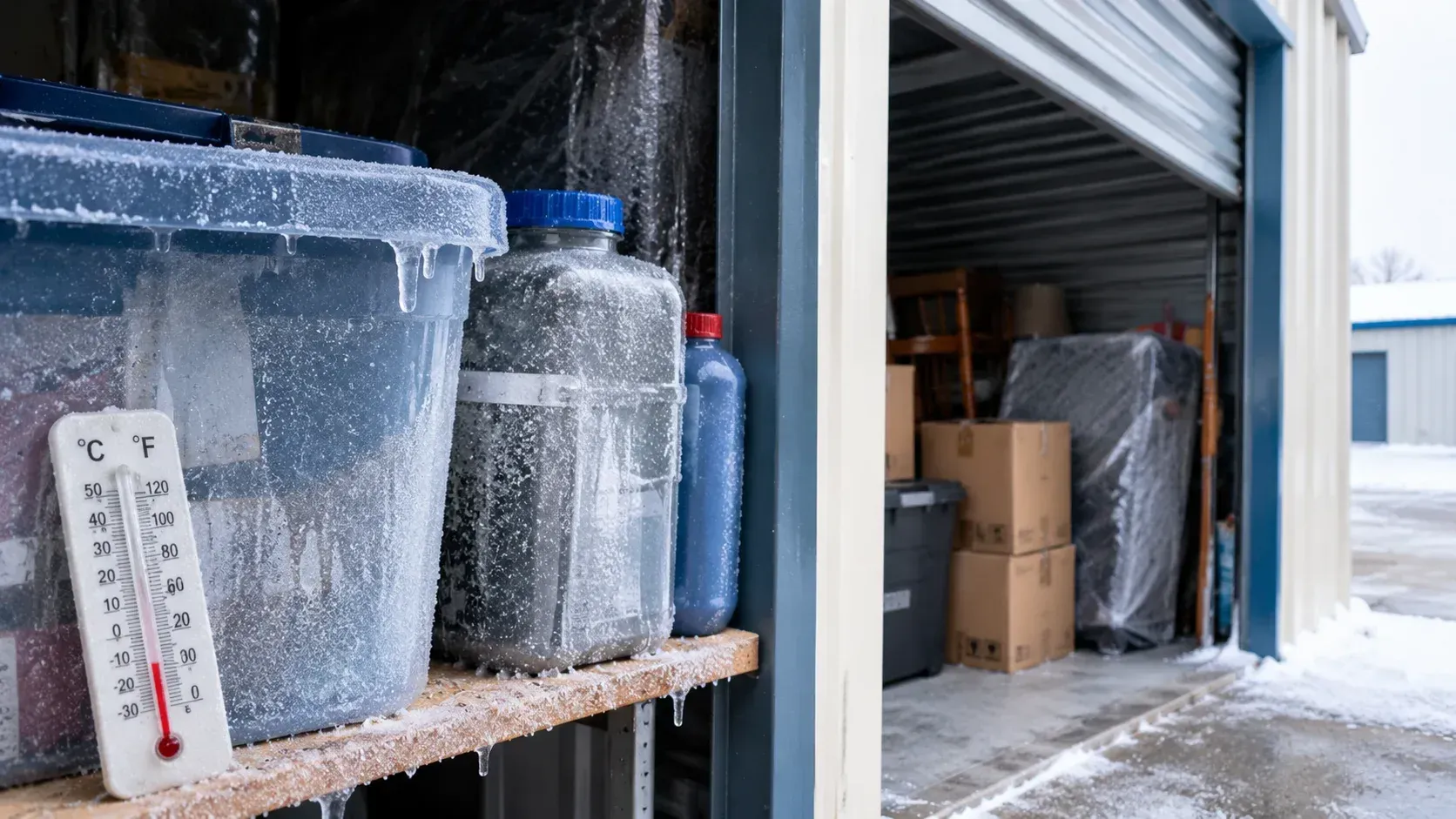
Table of Contents
- Introduction
- Yes, and Uri Is the Reason Gulf Coast Renters Ask
- What Actually Freezes and Bursts
- Non-Climate-Controlled Storage and the Items to Keep Out
- Why Gulf Coast Humidity Is the Bigger Year Round Risk
- How to Pack a Drive Up Unit for Both Problems
- What a Hard Freeze Does Not Hurt
- Conclusion
- Questions About What to Store?
- Frequently Asked Questions
Key Takeaways
- Anything water based can freeze, expand, and burst. Paint, cleaners, and canned drinks are the usual casualties.
- Batteries lose capacity in deep cold and screens can be damaged by it.
- Winter Storm Uri in February 2021 showed the Texas coast can hold below freezing for days, not hours.
- Humidity is the far more common threat here, and it works on your things every month of the year.
- Our units are all drive up and not climate controlled, so some items simply belong somewhere else.
Introduction
Yes, a hard freeze can damage things kept in non-climate-controlled storage, which is why anything water based belongs out of our drive-up units before winter. Liquids expand as they freeze and can split their containers, batteries lose capacity and can be permanently harmed, and screens and sealed electronics do not enjoy deep cold either.
Brazoria County does not get many hard freezes. February 2021 was the reminder that it gets some, and that they can last longer than anyone plans for.
Yes, and Uri Is the Reason Gulf Coast Renters Ask
Winter Storm Uri hit Texas in February 2021 and held much of the state, including the coast, below freezing for several consecutive days.
That duration is what made it different. A Gulf Coast cold snap usually dips below freezing overnight and climbs back by midmorning, which a closed storage unit shrugs off because the contents never get cold all the way through. A multi day freeze is another matter. Given enough hours, the inside of a unit equalizes with the outside, and the mass of what you stored stops protecting it.
So the honest answer has two halves. In a typical Brazoria County winter, a non climate controlled unit is fine for almost everything people put in one. In a Uri style event, the things that were always vulnerable finally get cold enough and long enough to fail.
Planning for the rare case is cheap. It mostly means not storing a handful of specific items in the first place.
What Actually Freezes and Bursts
Water expands when it freezes, and that expansion is what splits containers open.
The usual casualties:
| Item | What happens |
|---|---|
| Latex paint and stains | Freeze and separate, often ruined even if the can holds |
| Cleaning products and detergents | Water based, expand, split containers |
| Canned and bottled drinks | Burst, then thaw into everything around them |
| Water based adhesives and caulk | Separate and stop working |
| Batteries | Lose capacity, can be permanently damaged |
| Electronics with screens | LCD panels can be damaged by deep cold |
| Candles and wax items | Crack, though heat is the worse enemy |
| Vinyl records and media | Become brittle and warp |
| Musical instruments | Wood and glue joints move with temperature and humidity |
The secondary damage is what people forget. A single burst can of paint does not just ruin the paint. It thaws across a concrete floor and into whatever boxes were stacked nearby, which is usually how one cheap item takes out several expensive ones.
Non-Climate-Controlled Storage and the Items to Keep Out
Our units are drive up and not climate controlled, and we would rather tell you that plainly than have you find out in February.
Non climate controlled storage is right for most of what people store: furniture, boxes, appliances, tools, and household goods, which is exactly what our rules allow. It is the wrong place for a short list of things, and no amount of careful packing changes that.
Keep these somewhere conditioned instead:
- Paint, stains, and water based cleaners
- Anything in sealed liquid containers, including drinks
- Batteries of any kind, loose or in equipment
- Laptops, tablets, TVs, and anything with an LCD
- Instruments, records, and photographs
- Medication and anything with a storage temperature on the label
Worth saying clearly: our storage rules already prohibit hazardous materials, flammable liquids, perishable food, and living things, so some of this is a rule rather than a suggestion. If you are unsure whether something qualifies, the prohibited items question is worth a phone call before the truck is loaded, not after.
Why Gulf Coast Humidity Is the Bigger Year Round Risk
A hard freeze is a rare event. Humidity is every single month, and it quietly does more damage than cold ever will around here.
What humidity does over time:
- Mold and mildew on fabric, upholstery, mattresses, and paper
- Rust on tools, equipment, and anything with bare metal
- Warping in wood furniture and musical instruments
- Sticking and blocking between stacked photographs and book pages
- Corrosion on electrical contacts
The irony is that most people worrying about a February freeze have already lost something to July. A box of paperwork sitting directly on a concrete slab through a Gulf Coast summer absorbs moisture continuously, and nobody notices until they open it.
If you only change one habit after reading this, make it the humidity one. It applies to your unit all year rather than for the few nights a decade when the pipes freeze.
How to Pack a Drive Up Unit for Both Problems
Good packing handles cold and humidity at the same time, which is convenient because the same few moves cover both.
What works:
- Get everything off the concrete. Pallets, 2x4s, or a cheap shelving unit. Concrete wicks moisture and holds cold.
- Use plastic bins rather than cardboard for anything you care about. Cardboard absorbs moisture and collapses.
- Leave air gaps between stacks and away from walls so air can move.
- Add desiccant where it matters, and replace it periodically.
- Cover furniture with breathable cloth, not plastic sheeting, which traps condensation against the surface.
- Do not seal fabric in airtight plastic unless it is genuinely dry going in.
- Keep the vulnerable list at home, which is the step that actually prevents freeze damage.
That last line is the whole strategy. There is no packing technique that makes a non climate controlled unit safe for a can of latex paint during a multi day freeze. The answer is to not put it there.
What a Hard Freeze Does Not Hurt
Most of what goes into storage is genuinely fine, and it is worth saying so rather than making anyone anxious.
Cold does not meaningfully harm:
- Solid wood and metal furniture, as long as humidity is managed
- Dishes, cookware, and glassware
- Tools and hardware
- Appliances that have been fully drained of water
- Clothing and linens, stored dry
- Boxed household goods and sporting equipment
Appliances deserve one note. A washer, dishwasher, or refrigerator with an ice maker holds water in lines and pumps, and that water can freeze and crack a component. Drain them properly before storage and the freeze stops being a concern.
For whatever it is worth as a measure of how these facilities hold up, all three of our locations were accessible and available during Hurricane Harvey in 2017. Gulf Coast weather is the condition we built around.
Conclusion
A hard freeze can damage stored items, and Uri proved the Texas coast gets one occasionally. The fix is not elaborate. Keep liquids, batteries, screens, instruments, and photographs out of non-climate-controlled storage entirely, drain appliances before they go in, and get everything up off the concrete. Then spend the rest of your attention on humidity, because that is what is working on your belongings the other fifty one weeks of the year. Pack for the Gulf Coast you actually have, and the rare freeze takes care of itself.
Questions About What to Store?
If you are unsure whether something belongs in a drive up unit, ask before you load it. Lone Star RV & Mini Storage has been family owned in Brazoria County since 2003, serving local families for over 20 years across three gated facilities in Brazoria and Sweeny, with a 4.8 star average Google rating. All of our units are drive up with roll up doors, and all three locations stayed accessible through Hurricane Harvey. Call (979) 798-5798 or message us and we will tell you straight whether your unit is the right place for it.
Frequently Asked Questions
Can a freeze damage items in a storage unit?
Yes. Anything water based can freeze, expand, and split its container, which includes paint, cleaning products, and canned drinks. Batteries lose capacity in deep cold and can be permanently damaged, and LCD screens are vulnerable too.
What should not be stored in a non-climate-controlled unit?
Paint and water based cleaners, liquids in sealed containers, batteries, electronics with screens, musical instruments, vinyl records, photographs, and medication. Hazardous materials, flammable liquids, perishable food, and living things are prohibited outright.
Did Winter Storm Uri cause storage unit damage in Texas?
Uri held much of Texas, including the coast, below freezing for several consecutive days in February 2021. That duration is what matters. A brief overnight dip rarely reaches the contents of a closed unit, while a multi day freeze does.
Is humidity or cold the bigger risk on the Gulf Coast?
Humidity, by a wide margin. Hard freezes here are rare, while humidity works on stored belongings every month, causing mold on fabric and paper, rust on tools, and warping in wood. Keep everything off the concrete and use plastic bins.
Do I need to drain appliances before storing them?
Yes. Washers, dishwashers, and refrigerators with ice makers hold water in lines and pumps, and that water can freeze and crack components. Drain them fully and the freeze risk largely disappears.